The Love-Hate Relationship: Why Small Businesses Are Turning Against Yelp
Is Yelp hurting your small business? From the “filtered” review controversy to aggressive sales tactics and “pay-to-play” allegations, we dive into the unfair practices frustrating local business owners.
If you own a small business in 2026, you know the drill. You provide excellent service, your customer leaves a glowing 5-star review, and you do a little victory dance. Then, two days later, you check your page… and it’s gone.
Vanished. Relegated to the “Not Recommended” purgatory at the bottom of the page.
For years, Yelp has been a dominant force in local search, but for many business owners—from mechanics and restaurateurs to local contractors—it has become a source of immense frustration. Between the mysterious “filter” algorithm and aggressive sales calls, many are asking: Is Yelp actually on the side of small business?
Here is a look at the controversial practices that have business owners crying foul.
1. The “Review Filter” Controversy
The biggest complaint against Yelp is its automated recommendation software. Yelp claims this algorithm is designed to protect consumers from fake reviews. In practice, however, it often hurts honest small businesses.
If you ask a loyal customer to leave you a review, but they aren’t an “active” Yelper (meaning they don’t review restaurants every week), Yelp’s algorithm frequently flags their review as “Not Recommended.”
- The Unfair Reality: You did the work, the customer was real, and the feedback was genuine. But because that customer doesn’t spend their life on Yelp, their 5-star rating doesn’t count toward your score. Meanwhile, a 1-star rant from a user with a “history” often sticks instantly.
2. The “Pay-to-Play” Allegations
Perhaps the most persistent rumor in the small business world is the “Pay-to-Play” model.
- The Allegation: Countless business owners have reported a suspicious correlation: “I refused to buy Yelp ads, and suddenly my best reviews disappeared.” Or conversely, “The moment I started paying for ads, the bad reviews were filtered out.”
- The Legal Stance: It is important to note that Yelp vehemently denies these claims and has even won lawsuits (including Levitt v. Yelp! Inc.) where courts ruled that their manipulation of reviews (if it occurred) did not legally constitute extortion.
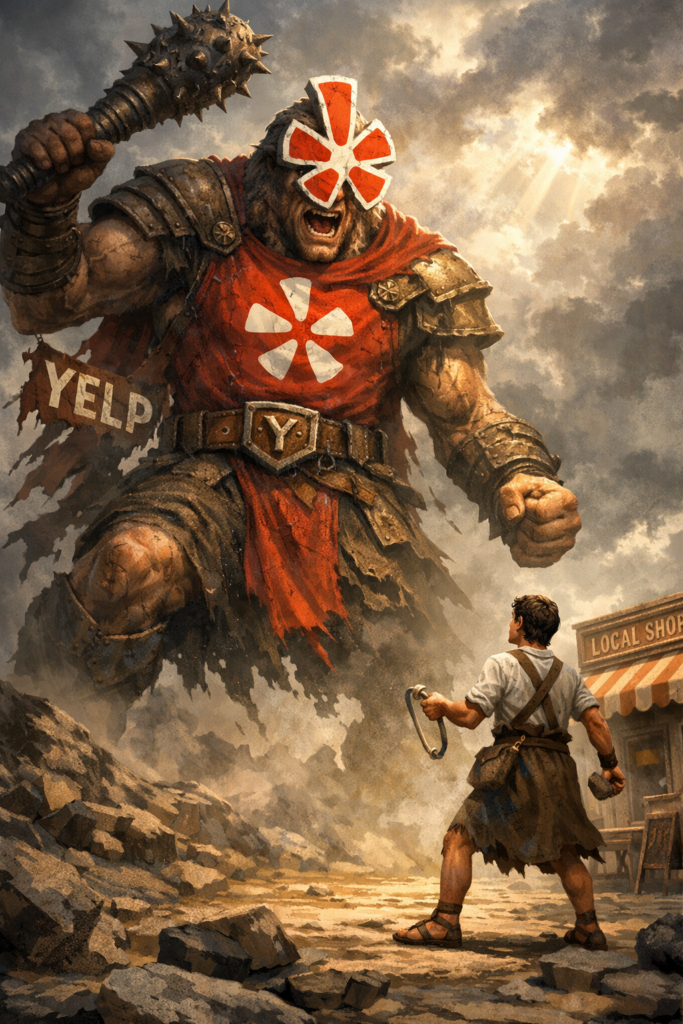
- The Court of Public Opinion: Despite the legal wins, the perception among thousands of business owners remains that Yelp’s ad platform operates like a “protection racket”—a sentiment explored in the documentary Billion Dollar Bully.
3. Aggressive Sales Tactics
If you have claimed your business page on Yelp, you have likely received The Call. Yelp’s sales representatives are notorious for their persistence. Business owners report receiving calls weekly (sometimes daily) from different numbers, often using high-pressure tactics.
- The Pitch: Reps often imply that buying ads is the only way to secure your page’s visibility or manage your reputation.
- The Harassment: “No” is rarely accepted as an answer. Many owners report that after hanging up, they are simply called by a different rep the next day.
4. Holding Your Reputation Hostage
Unlike other platforms where you can choose to delete your account if you don’t like the service, Yelp does not allow businesses to remove their listing. Once your business is on Yelp, it stays there. You cannot opt-out. This lack of control leaves business owners feeling trapped, forced to participate in a platform they may not support.
🛡️ What Can Small Businesses Do?
If you are tired of the Yelp rollercoaster, the best defense is diversification.
- Focus on Google Business Profile (GBP): Google is the king of search. Reviews here help your SEO more directly than Yelp does.
- Build Your Own “Social Proof”: showcase your testimonials on your own website and social media where you control the narrative.
- Don’t Obsess: You cannot beat the algorithm. Focus on providing service so good that the sheer volume of happy customers eventually drowns out the noise.
Are you frustrated with how Yelp handles your reviews? You aren’t alone. Focus on building a community that trusts you, not an algorithm.